
Description
Placenta Encapsulation
For centuries, cultures around the world have honored the placenta as an important part of the birth process, including traditions of consuming the placenta postpartum. Placenta consumption has also become increasingly popular in the United States, particularly through placenta encapsulation.
The placenta is a temporary organ created by the body during pregnancy. It supports the developing baby by delivering oxygen and nutrients and removing waste products. The placenta also contains a variety of nutrients and hormones, including iron, vitamin B6, vitamin B12, progesterone, and estrogen.
There are several ways a person may choose to incorporate their placenta into their postpartum experience, but encapsulation, where the placenta is prepared, dehydrated, powdered, and placed into capsules, is one of the most common.
Placenta Encapsulation 101
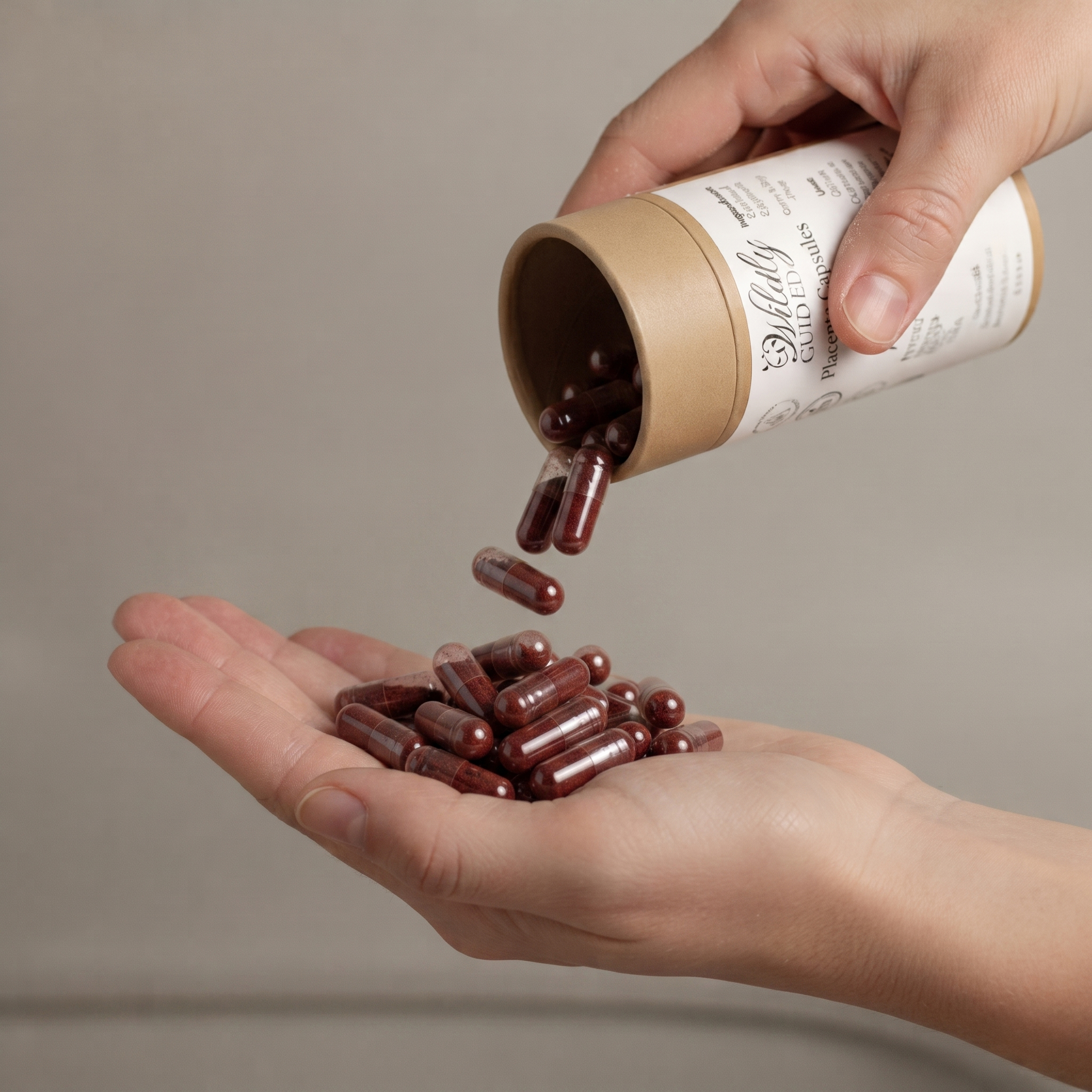
Placenta encapsulation is the process of preparing the placenta for postpartum consumption by turning it into capsules. At Hearth & Home Midwifery, the placenta is gently prepared, steamed with ginger and myrrh, dehydrated in a food-grade dehydrator, ground into a fine powder, and placed into capsules.
For those who choose encapsulation, the process generally begins shortly after birth, with the finished capsules prepared for postpartum use within the following days.
The placenta is first placed on a clean, protected surface. If desired, a placenta print can be created as a keepsake before preparation begins. The umbilical cord and amniotic membranes are then separated from the placenta, after which the placenta is gently rinsed and prepared.
The placenta is steamed for approximately 20 minutes with ginger and myrrh before being removed from the steamer and sliced. The slices are then placed into a food-grade dehydrator until completely dried. If desired, the umbilical cord may also be dehydrated separately to create a keepsake.
Once fully dehydrated, the placenta is ground into a fine powder. The powder is then placed into size 00 capsules and stored in a glass container. Refrigeration is recommended for storage until the capsules are used.
The Potential Benefits
Research on human placenta consumption remains limited, so much of what is reported about its postpartum benefits comes from personal experiences and anecdotal reports rather than large clinical studies.
Those who choose placenta encapsulation commonly report benefits such as:
- Supporting postpartum iron replenishment
- Supporting milk production
- Supporting postpartum energy and recovery
- Supporting emotional well-being and mood
- Providing a source of naturally occurring nutrients
- Supporting the body’s transition through postpartum hormonal changes
The placenta contains hormones and other compounds that may remain present to some degree following preparation. Small studies have detected hormones such as progesterone and estradiol in processed placenta, although the extent to which these compounds produce meaningful effects when consumed orally is not yet well established.
For many families, placenta encapsulation is also meaningful as a way of honoring the placenta and continuing a tradition that has been practiced in different cultures for generations.
The Considerations
Because research on placenta encapsulation is limited, there is still much that is not known about its potential benefits or risks.
Some people report feeling energized or experiencing an increased sense of well-being after taking their placenta capsules, while others report no noticeable effects. Some anecdotal reports describe temporary feelings of jitteriness or increased anxiety. Experiences with milk supply also vary, with some people reporting an increase and others reporting no change or even a decrease.
There are also important considerations surrounding safe handling, preparation, storage, and the potential for contamination. The Centers for Disease Control and Prevention has published a case report involving neonatal infection associated with maternal consumption of contaminated placenta capsules, which is one reason careful preparation and informed decision-making are important.
Making Your Decision
Choosing whether or not to encapsulate your placenta is a deeply personal postpartum decision.
There is not currently enough high-quality research to establish placenta encapsulation as a proven treatment for postpartum mood disorders, low milk supply, anemia, or other postpartum conditions. At the same time, many parents choose encapsulation because of personal experiences, traditional practices, the nutritional composition of the placenta, or simply because honoring and consuming the placenta feels meaningful to them.
Understanding both what is known and what remains uncertain allows each person to make an informed choice that feels right for their own postpartum experience.
If you choose to encapsulate your placenta, thoughtful handling, thorough dehydration, appropriate storage, and clear communication about your individual circumstances are important parts of the process.
Size/amount can vary depending on the size of your placenta.
You must be logged in to post a review.
Reviews
There are no reviews yet.